
Intutive control of wheelchairs using high-resolution muscle signals
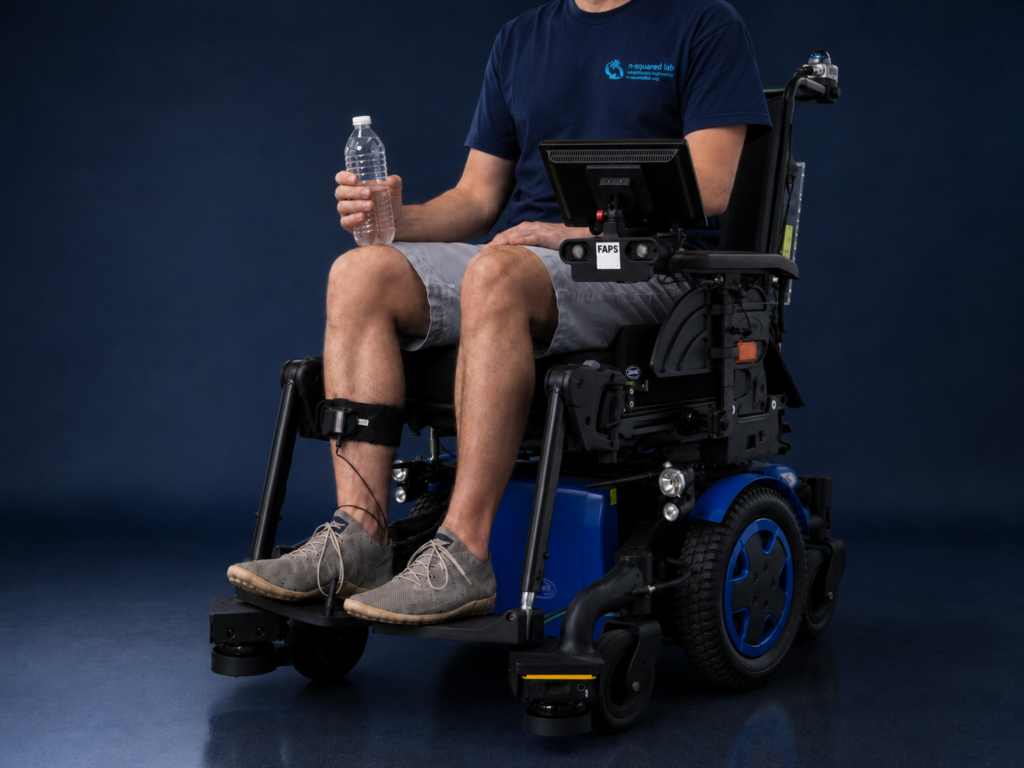
This study is about developing and testing a smarter way to control an electric wheelchair. EMGRoll combines two key elements: muscle-signal-based wheelchair control and smart wheelchair support. The user gives movement intentions through small muscle signals from the legs, while the wheelchair uses its sensors to understand the surroundings and support safer, smoother movement.
The basic idea is simple: even when no visible leg movement is possible, small muscle signals may still remain. With a small, wearable, and non-invasive sensor on the leg, we measure this activity and translate it into wheelchair commands.
This approach may help people who have difficulty using a joystick. It may also be useful for wheelchair users who can already control their wheelchair, because their hands stay free for everyday activities such as opening doors, carrying objects, using a phone, or interacting with other people.
The smart support can help the wheelchair react to the environment, for example by considering obstacles or supporting smoother movement. The goal is not to take control away from the user, but to make wheelchair control safer, easier, and more comfortable — moving towards a smart wheelchair that understands the user’s intention and supports more independent mobility in everyday life.
Aims of the study
Measuring muscle activity
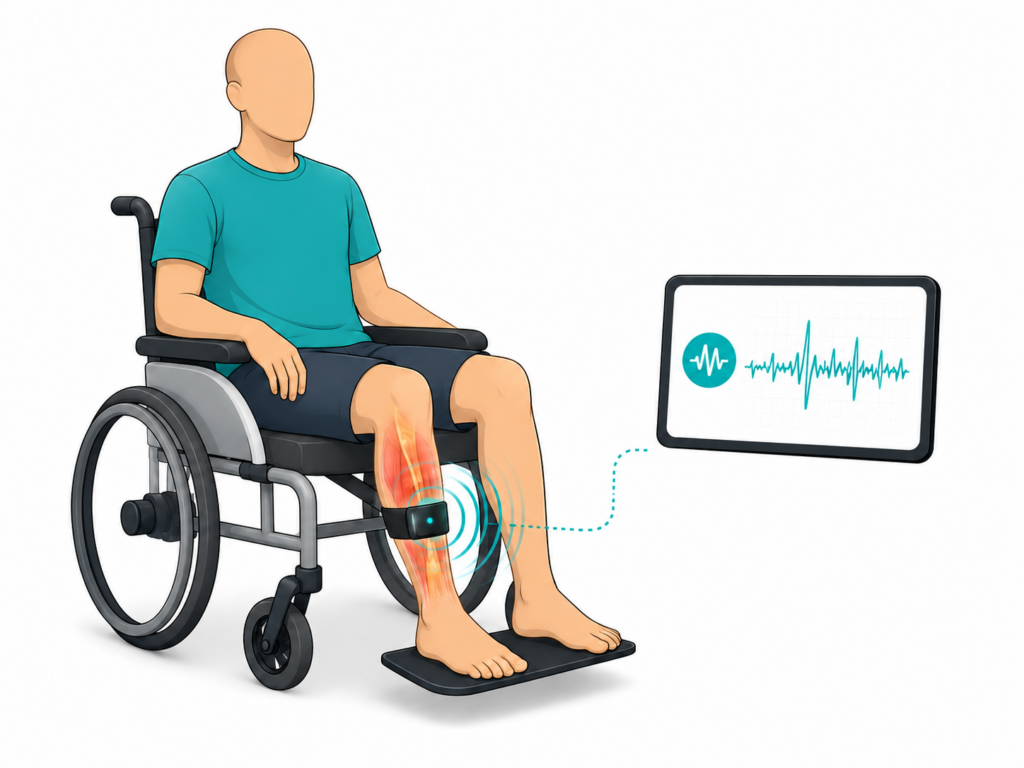
By placing a small, wearable and non-invasive sensor on the leg, we measure the residual muscle activity during attempted leg movements. Here, we want to find out how much activity remains when leg movement is limited or not visible due to paralysis or other neuromuscular disorders.
Detecting movement intentions
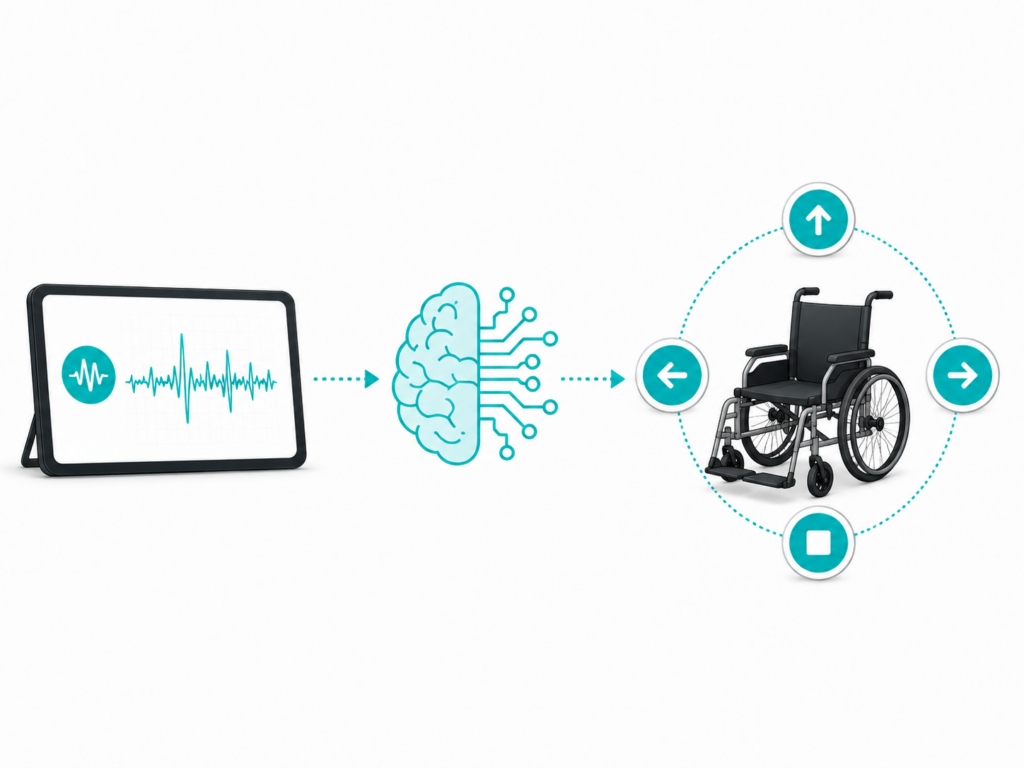
Using artificial intelligence, we recognize your movement intentions from the measured muscle signals. In this study, we are investigating which wheelchair-control intentions we can read out from your lower leg muscles, such as starting, stopping, or changing direction.
Controlling the wheelchair
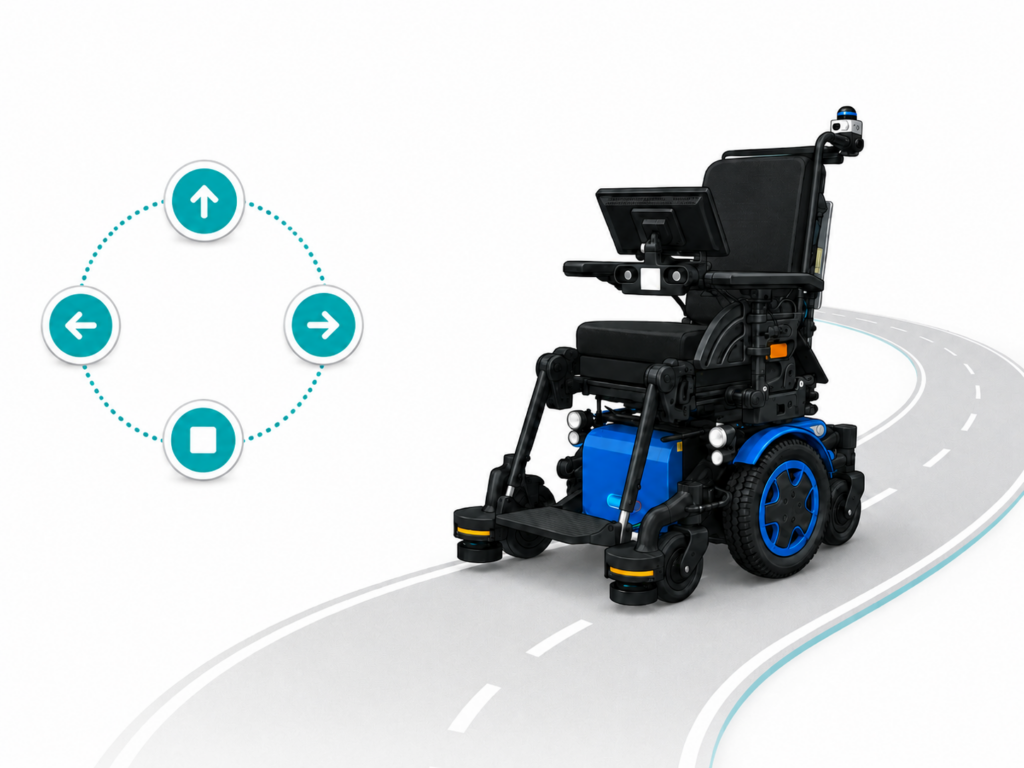
After detecting your movement intentions, we check whether they can be used safely and reliably for wheelchair control. If this is possible, the system translates them into wheelchair commands, allowing you to control our wheelchair through muscle signals from your lower leg.
What to expect
Initial contact: information and orientation
After you contact us by phone or email, we arrange a short online meeting via Microsoft Teams. We introduce the study, explain how it works, and discuss what participation would mean for you. We also plan the study location together: usually, the sessions take place in our research environment in Erlangen, but in selected cases, for example through partner clinics or hospitals, we may also be able to come to you. You will also have time to ask all your questions.
Session 1: measuring muscle activity
In the first session, we measure muscle activity from your lower leg using a small, wearable, and non-invasive sensor. You will be asked to try different leg movement intentions while we record your muscle signals. The measurement is painless and does not require visible leg movement.
Analysis of your signals
After the first session, we analyze the recorded data and check whether clear movement intentions can be identified from your muscle signals. We will inform you about the result.
Session 2: training with the wheelchair
If your muscle signals can be used reliably enough, we arrange a second appointment. In this session, you will test our wheelchair and try to control it using muscle signals from your lower leg. Depending on the study condition, you may also try the smart wheelchair support, where the wheelchair uses its sensors to help make driving safer and easier.
Feedback, safety, and data protection
Your feedback is very important to us. We will ask how the control feels, how easy it is to use, and what could be improved. The study is supervised by the research team, and your data will be treated confidentially and used only for scientific purposes.
Who can take part?
You’re a good fit for our study if the following points apply to you:
- You are between 18 and 85 years old.
- You use a wheelchair, either every day or only sometimes.
- You are interested in testing an innovative wheelchair control system.
- You are motivated to contribute to the development of a smart wheelchair that may support more independent mobility in the future.
- You are able to take part in Erlangen, or in selected cases at one of our partner clinics or hospitals.
Contact
| Amin Olamazadeh | Research associates | Email: amin.olamazadeh@fau.de |
Partners & Project Sponsors