Neuromuscular Physiology and Neural Interfacing (N-squared) Laboratory!

Welcome to the Neuromuscular Physiology and Neural Interfacing (n-squared) lab!

The Neuromuscular Physiology and Neural Interfacing (n-squared) laboratory aims at deciphering neuromuscular function and developing human-machine interfaces for neurorehabilitation and restoring of motor function. Our lab activities are focused on the acquisition and analysis of neural signals with high spatial and temporal resolution (matrix arrays) from the central and peripheral nervous system of human and non-human primates as well as other animal species.
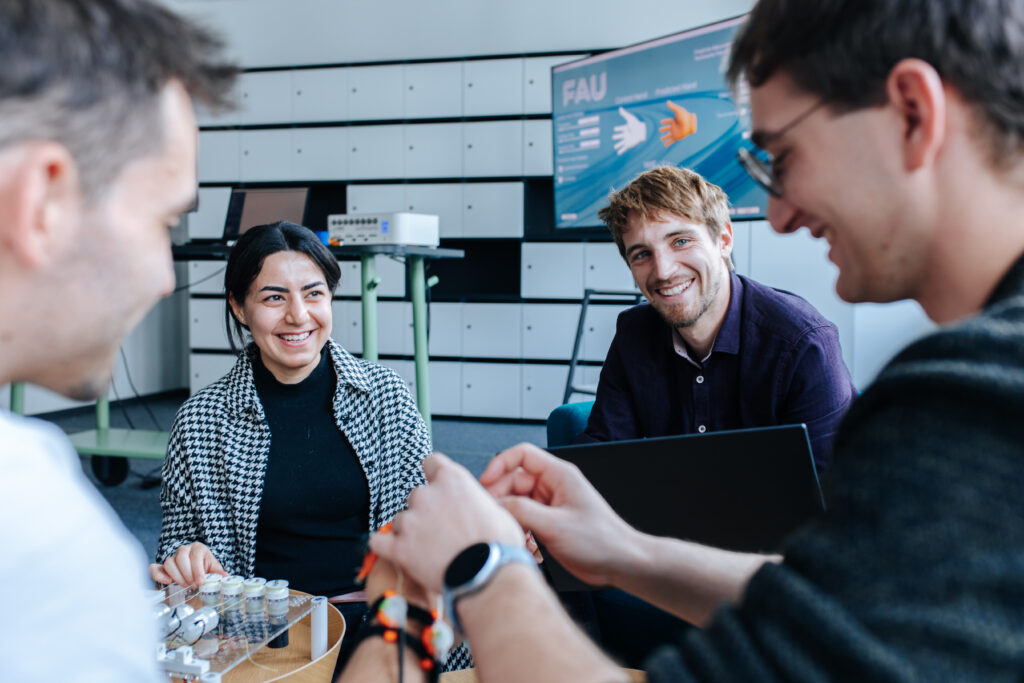
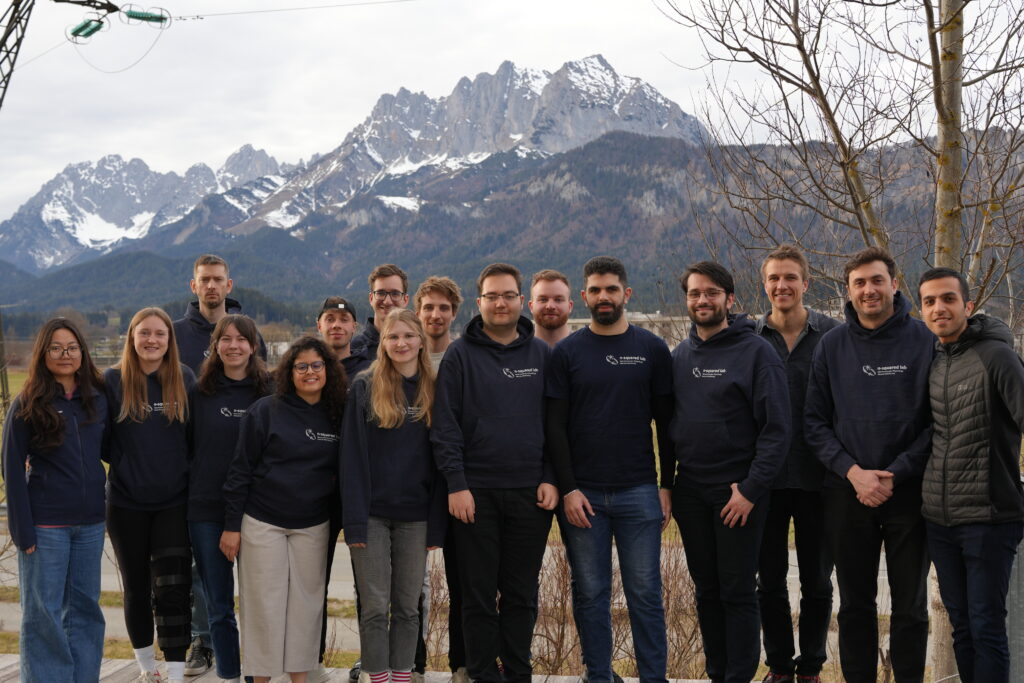
The n-squared group was founded by Prof. Alessandro Del Vecchio in 2020.


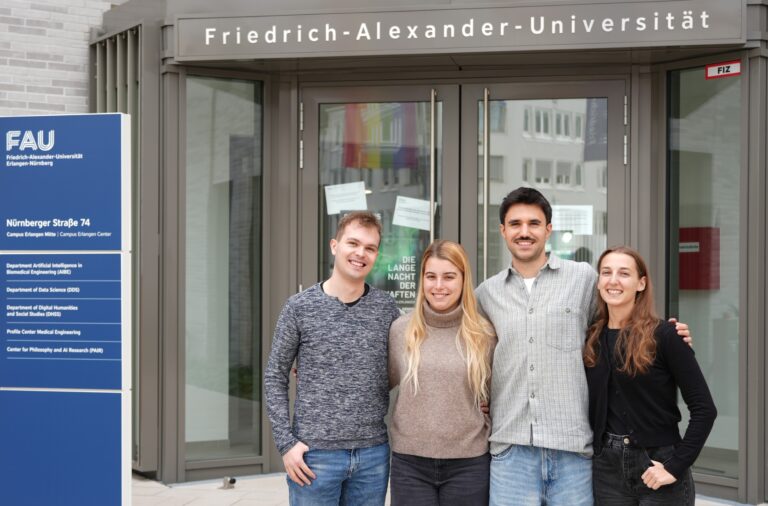
We are currently hosting four international researchers at our n-squared lab, and we are delighted to welcome them to our team! It is exciting to see talented researchers from prestigious universities, including the Politecnico di Torino and the University of Bologna, collaborating with us on proje...

Category: News, Research

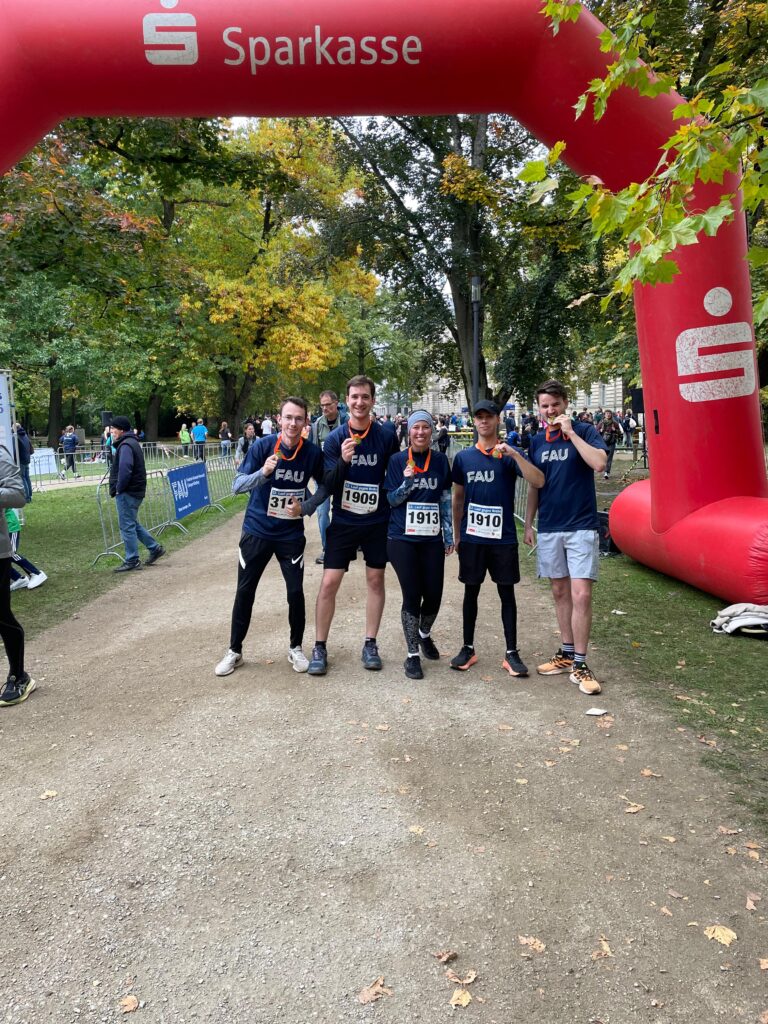
Last week, our n-squared lab members took part in this year’s Run Against Cancer (Lauf gegen Krebs) in Erlangen’s Schlossgarten. Together, they managed an impressive 70 laps! The Run Against Cancer raises awareness of the importance of nutrition and exercise therapy and supports research in the fig...

Category: News, Social

Ten of our PhD students represented the department at the Motoneuron Conference in Newfoundland, showcasing their work on motor neuron research. The team contributed with multiple posters, two oral presentations and Prof. Alessandro Del Vecchio also hosted a panel, bringing our expertise to the moto...

Category: Allgemein, News, Research, Social

Our prestigious ERC Proof of Concept grant "PlayAgain" just started. For this we are developing a minimally invasive neuromotor interface for children with paralyzed hands following pediatric stroke or hemispherotomy. Building on our discoveries of spared motor neuron activity in paralysis, we wi...

Category: News, Research

Our latest paper reveals high neural specificity in how motor units are recruited for single- and multidigit hand tasks. By combining 3D hand kinematics with high-density EMG recordings, the study shows that only a small fraction of motor units are active across both task types, highlighting the pre...

Category: News, Research